
On the shores of Lake Victoria, residents of Mfangano Island are showing how better health is possible when communities lead.
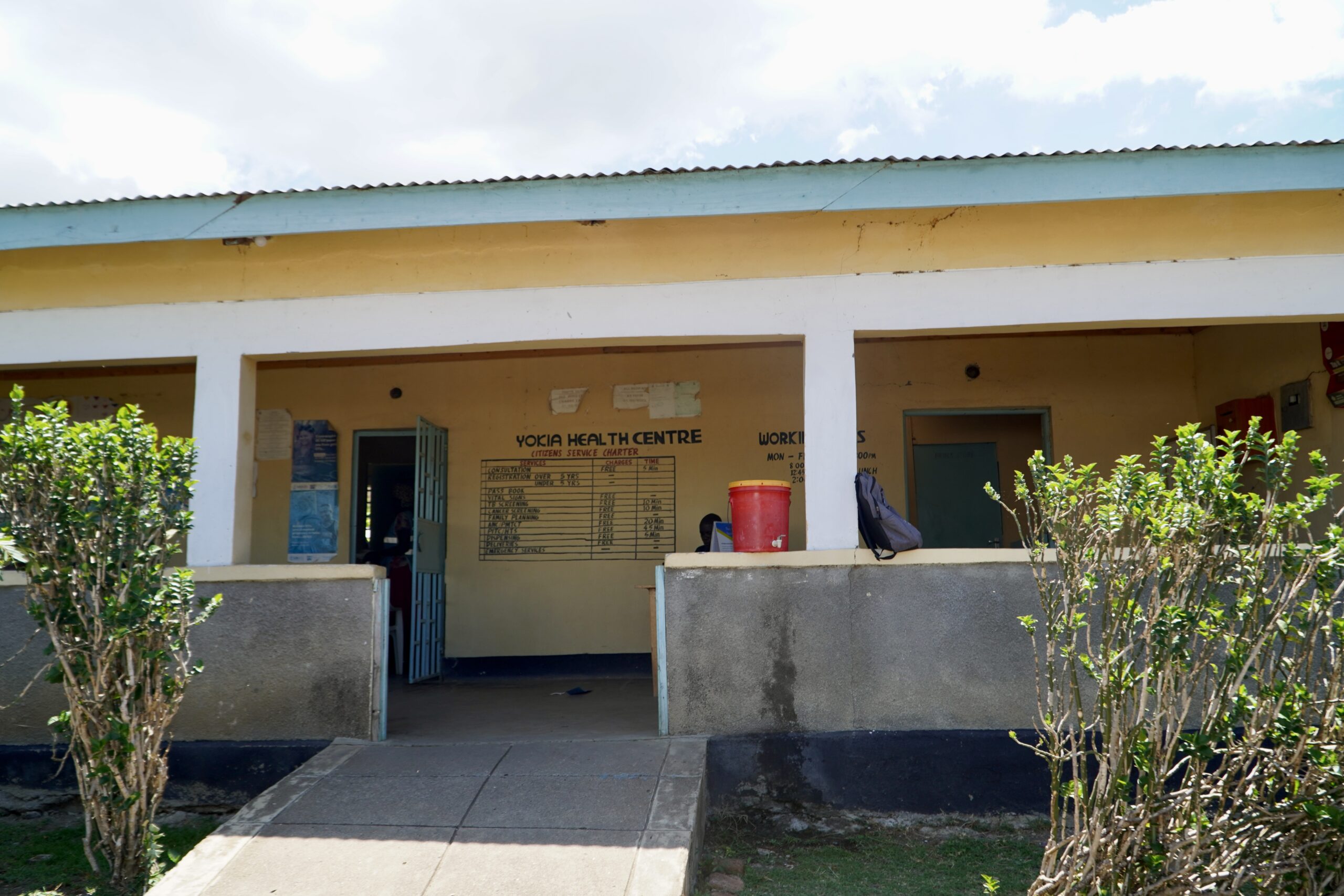
For families living near Yokia Beach, a fishing community in Homa Bay County, the island’s rugged hills and rocky paths have made accessing health care a challenge. Without a reliable road to Yokia Health Center, which serves 1,500 people, pregnant women and those needing urgent treatment faced a difficult journey to the facility, often to find services unavailable.
Today, residents have turned those challenges into opportunities for change. With support from Lwala and the government, community health committees, facility staff, and CHWs are strengthening local services, rebuilding trust, and making high-quality care more accessible.
From community concerns to collective action
In May 2024, Lwala expanded its community-led health model to Homa Bay County. Working alongside communities and county government, Lwala now reaches 1.2 million people across the county. Central to this work are community health committees—governance structures that bring together diverse community members to set health priorities and hold government accountable.
Lwala has trained community health committees across every village in Homa Bay, and 99% are actively fulfilling their roles, up from 80% in 2024— meaning they are meeting regularly, improving local health services, and holding government accountable. In late 2024, Lwala supported a Community Scorecard process at Yokia Health Center, which brings together community health committees, facility leaders, and community members to assess health services and agree on improvements. The dialogue surfaced concerns about the availability of medicines and reliability of services, alongside practical challenges: no road to the health facility, unfinished housing for staff, and no electricity.
With Lwala’s support, the community health committee turned these priorities into collective action. The community pooled its own funds to improve the road connecting Yokia Health Center to the main road. Residents also completed staff housing, making it easier for health workers to remain nearby—essential for providing round-the-clock care in a remote community.
They also financed the facility’s electrical wiring themselves, with Kenya Power & Lighting installing a meter and connecting the facility to electricity. Their investment, along with engagement from local leaders, helped mobilize additional support from county government to provide lighting for the delivery room and a solar-powered refrigerator to safely store medicines.
Together, these improvements demonstrate the power of shared responsibility: the community health committee acted on community priorities, government helped strengthen facility infrastructure, and facility leadership worked alongside the community to build lasting solutions. The result extends beyond a road, housing, or electricity—Yokia’s residents have demonstrated their power to improve health care for their community.
“Working with this community has been the greatest achievement of my life."
- Moraa Meroka, Facility In-Charge
Strengthening care and rebuilding trust
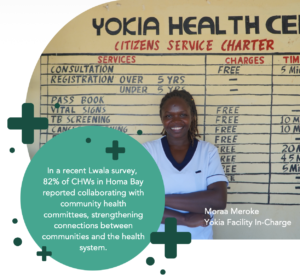
High-quality health care requires trained health workers that have the tools they need to respond. Before joining Yokia Health Center as the new facility in-charge, Moraa Meroka had completed a Lwala-supported training on emergency maternal and newborn care, equipping her to manage complications such as postpartum hemorrhage and preeclampsia, and to resuscitate newborns. These skills were critically important on an island where reaching a larger facility can take valuable time. Lwala also helped expand the availability of essential medicines at the facility, including antibiotics and treatment for hypertension.
High-quality care also depends on trust. At Yokia, Moraa participated in community dialogues, listening to residents' concerns and explaining the services that the facility could provide. Over time, these conversations helped rebuild confidence among families who had become uncertain about local care.
“Working with this community has been the greatest achievement of my life,” Moraa reflects. “It was my first time as an in-charge, and I rebuilt community trust in the facility.”
Growing use of the facility reflects this changing relationship. Between 2024 and 2026, child wellness visits increased by 10%, family planning visits rose by 42%, and childhood immunization increased by 50%.
Connecting households to care
For Margaret Odhiambo, who has served as a CHW for 20 years, the transformation in Yokia is deeply personal. Margaret remembers accompanying women in labor across the island’s rocky terrain, sometimes arriving at Yokia Health Center only to find that medicines or staff were unavailable.
Today, Margaret can refer women to Yokia Health Center with great confidence. For CHWs like her, reliable care nearby makes it easier to encourage families to seek treatment and follow through on referrals
Across Homa Bay, Lwala has supported 2,970 CHWs, who are trained, paid, supervised, and equipped with the tools they need to do their job—building a supported, accountable workforce prepared to conduct household visits and connect families to services. Today, CHWs in Homa Bay have registered 98% of households and visit on average 60% of households each month, compared to 34% nationally.
A stronger health system, built together
Yokia’s transformation is sustained by its relationships. Monthly meetings bring together facility staff, CHWs, and community health committee members to share concerns, review health data, and work together to improve services.
One example is a shared effort to encourage women to begin antenatal care earlier in pregnancy. The facility provides pregnancy tests to CHWs, helping them identify pregnancies early and connect women to care. Community health committees raise awareness during community gatherings, while facility teams review antenatal care data and coordinate follow-up with CHWs. Lwala-supported maternity open days create additional opportunities for women and their partners to learn about available services. As a result, new antenatal care visits increased by 22% between 2024 and 2026.
Yokia shows community-led health in practice: communities lead local health initiatives and hold government accountable; trained and equipped health workers provide high-quality services; and professional CHWs connect families to care. Lwala is working alongside national and county governments to strengthen the policies and systems that can bring this model to communities across Kenya.
From the road leading to the health center to the home built for Moraa, Yokia’s transformation shows what’s possible when communities have a voice in shaping the health system they deserve.
